| Manufacturer | Byrna Technologies (USA) |
| Launcher Type | Pistol — semi-automatic |
| Power Source | CO₂ — 8g cartridge (Pull-Pierce; punctures on first trigger pull) |
| Caliber | .68 caliber round ball |
| Projectiles | Kinetic, Pepper (OC), Max (OC+CS), Pro Training |
| Weight | 1.3 lbs unloaded |
| Rail System | Picatinny (underbarrel frame rail) |
| Best Suited For | Daily carry — users prioritizing concealability and projectile variety over raw joule output |
Design & Build Quality
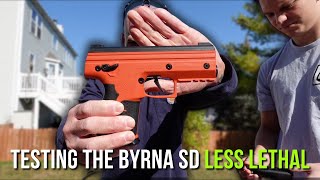
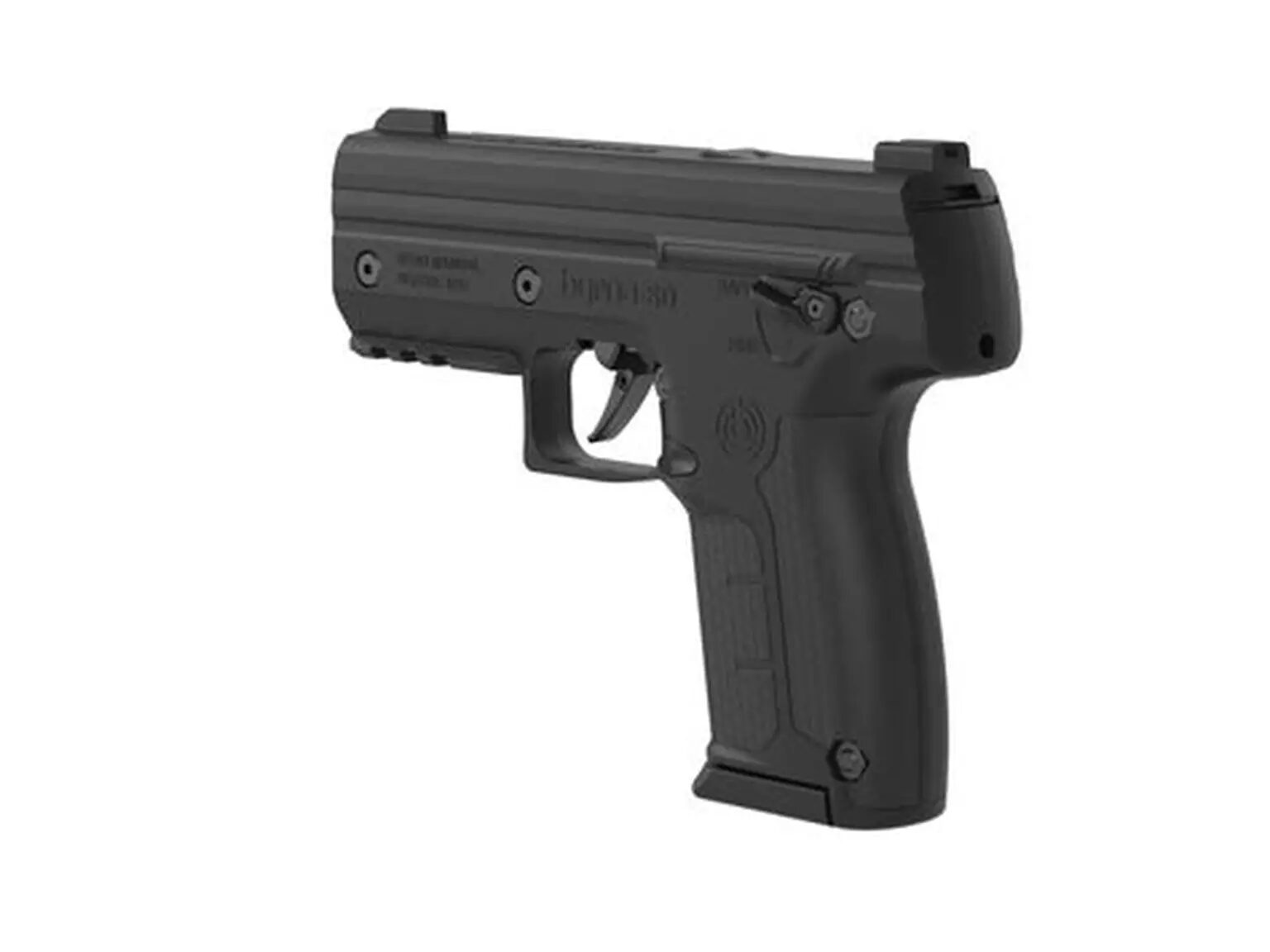
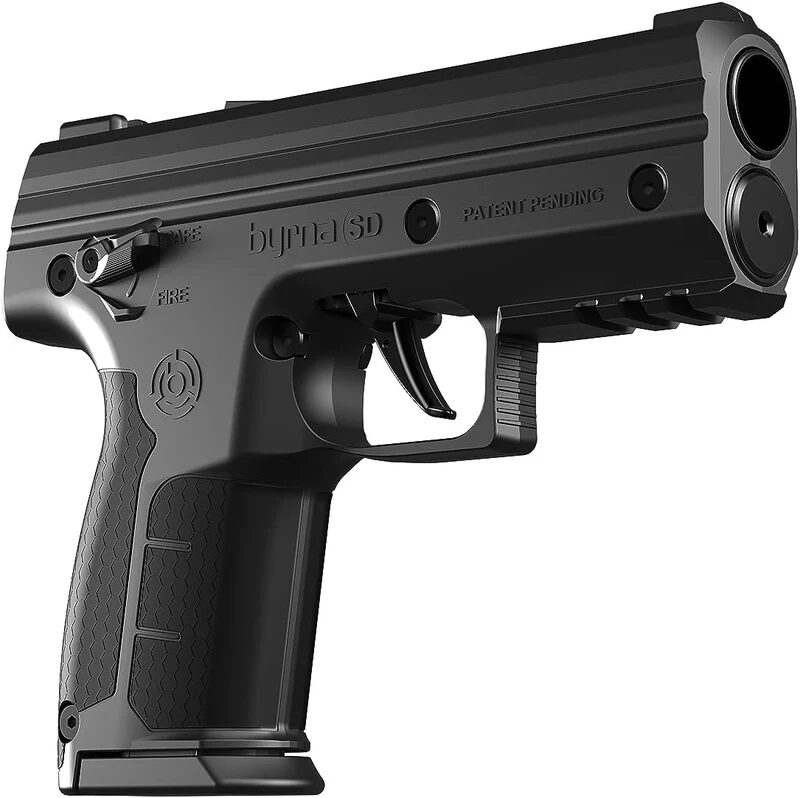
The Byrna SD is built on a fiber-reinforced polymer frame with a profile deliberately designed to resemble — and holster like — a compact pistol. At 1.3 lbs unloaded, it sits comfortably in an IWB or OWB holster designed for a Glock 26 or similarly sized compact. The action is bolt-fed: each trigger pull cycles a new round from the 5-round rotary magazine into the barrel. There is no hammer or slide — the mechanism is internal and gas-driven, giving the SD a snag-free exterior profile.
The Pull-Pierce CO₂ system is Byrna’s most distinctive engineering decision. The 8g cartridge seats in the grip and is not pierced until the first trigger pull — meaning the launcher can be stored or carried loaded without depleting gas. The tradeoff is that the first shot pierces the cartridge and fires simultaneously; there is no pre-stage option without expending a round. A manual safety selector sits at the thumb position and is right-hand biased, though Byrna has improved ergonomics across generations. Build quality is solid for the category — anodized internal components, consistent tolerances, and a trigger pull that is predictable if not crisp.
Performance & Ballistics
The SD’s ~300 FPS velocity from an 8g CO₂ cartridge puts it at approximately 12 joules of muzzle energy — sufficient for the close-range defensive use case the platform is designed for, but clearly below the 30–50 joule range of HPA-based competitors. At 20–30 feet, kinetic rounds deliver a meaningful pain compliance impact. At 60 feet (Byrna’s rated effective range), velocity has bled down enough that penetration-style impact is reduced. Temperature sensitivity is the SD’s most consistent performance variable: below 50°F, 8g CO₂ output drops noticeably, and shot-to-shot velocity consistency degrades. Users in cold climates should plan accordingly.
The 5-round rotary magazine feeds reliably. Misfires are uncommon but documented; the most frequent cause is improper CO₂ seating or a depleted cartridge before the counter reaches zero. Accuracy at 30 feet is realistic for a trained shooter — the round ball projectile is not precision-shaped, and wind or environmental conditions affect trajectory more than a pointed round would. For the intended use case (close-range, single-target deterrence), the SD’s performance profile is appropriate.
CO₂ System
The 8g CO₂ cartridge is the SD’s most significant platform-level constraint. Compared to the 12g cartridge used in the Byrna LE and most competing platforms, the 8g yields lower peak pressure and fewer consistent shots — approximately 22 shots before performance degrades, versus 17+ consistently higher-velocity shots from a 12g. Byrna’s choice of the 8g for the SD was driven by the compact grip profile; a 12g cartridge would require a longer grip or an external magazine configuration.
Cartridges are widely available (hardware stores, Walmart, online), making resupply straightforward. Standard 12g paintball/airsoft CO₂ cartridges are NOT compatible with the SD — use only Byrna-specified 8g cartridges to avoid fit and sealing issues. CO₂ performance at ambient temperature (68–75°F) is the rated condition; users should benchmark their specific unit at the temperatures they expect to use it in.
Projectile Compatibility
The Byrna SD fires the full range of Byrna’s .68 caliber round ball projectile lineup. Kinetic rounds are impact-only solid nylon/PVC balls — appropriate for training and situations where chemical agents are not warranted. Pepper (OC) rounds are hollow fill rounds containing OC powder that aerosolizes on impact with the target. Max rounds combine OC and CS in a single round — the most aggressive option in the Byrna civilian lineup. Pro Training rounds are inert powder-filled rounds for target practice without chemical exposure.
The SD does not support fin-stabilized or elongated projectiles (.68 cal slug rounds used in some HPA platforms). All Byrna projectile formats are proprietary but are purpose-designed for the round-ball bore. Third-party .68 cal round balls from paintball suppliers are dimensionally compatible but vary in quality; Byrna does not warrant performance with non-Byrna projectiles.
Known Issues & Limitations
- 8g CO₂ performance drops noticeably below 50°F — cold weather use significantly reduces velocity and consistency.
- 5-round magazine requires frequent reloads; spare magazines are a near-mandatory accessory for any serious use case.
- 300 FPS / ~12 joules is at the low end of the effective range for kinetic impact at 60 feet.
- Pull-Pierce means the CO₂ punctures on the first shot only — no way to pre-stage without also firing a round.
- Not compatible with standard 12g CO₂ cartridges — 8g only.
Accessories & Upgrade Ecosystem
- Kinetic, Pepper, Max, and Pro Training projectile refill packs (Byrna ecosystem)
- Extra 5-round rotary magazines
- OWB and IWB holsters (Byrna-branded and third-party Kydex)
- Picatinny rail mount accessories (lights, laser sights)
- Red dot sight adapter
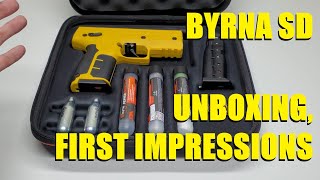
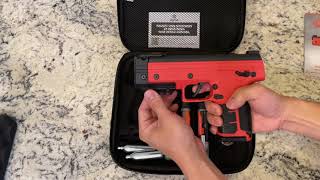
- Hard carry case
- 8g CO₂ cartridge multi-packs
Platform Summary
The Byrna SD earns its position as the category’s best-known entry point. Its Pull-Pierce system, compact carry profile, and access to the broadest civilian projectile ecosystem in the market make it a sensible first platform for users new to less lethal. For users upgrading from the SD, the LE addresses the most meaningful performance gaps (higher velocity, more consistent gas, better trigger) at a cost premium that most users find justified.
Where the SD falls short — joule output, shot count on cold days, magazine capacity — are known and documented constraints, not surprises. If you are choosing between the SD and LE and budget is not the deciding factor, the LE wins on every performance metric. If carry weight, grip size, and daily concealment are the primary concerns, the SD remains the more practical choice.